
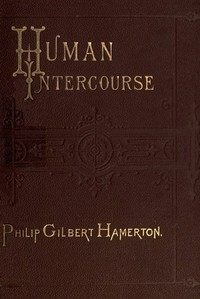
Human Intercourse by Philip Gilbert Hamerton
First published in 1884, Human Intercourse is a series of thoughtful essays on the art of living with other people. Don't expect a novel with a plot. Instead, picture a wise, slightly old-fashioned friend pulling up a chair by the fire to talk about the things we often don't say out loud.
The Story
There's no traditional story here. The book is built from chapters that explore different facets of how we connect. Hamerton writes about the foundations of friendship, the challenges of talking about ideas without starting arguments, the role of family in our social lives, and even the delicate balance between solitude and society. He uses observations from his own life, history, and literature to illustrate his points. One chapter might dissect why some conversations flow and others falter, while the next considers how our personalities shape the company we keep. It's a slow, reflective walk through the landscape of human relationships.
Why You Should Read It
What struck me is how current it feels. We're drowning in 'communication' today—texts, social media, endless noise—yet genuine understanding can feel scarce. Hamerton writes about the quality of connection, not the quantity. His chapter on 'The Intellectual Life in Common' is a brilliant look at how to share ideas without ego or competition. He’s honest about the work good relationships require, but he’s also wonderfully hopeful. He believes we can get better at this, that 'human intercourse' is a skill we can practice. Reading him feels like a quiet reset, a reminder to look up from the screen and remember the person across from you.
Final Verdict
This is a book for the patient and reflective reader. It's perfect for anyone who enjoys classic essayists like Montaigne or Emerson, or for modern fans of authors like Alain de Botton who tackle everyday philosophy. If you're looking for a fast-paced story, look elsewhere. But if you want a thoughtful, beautifully written companion that makes you think about your own conversations and connections, Hamerton's gentle wisdom is a rare treat. It’s the kind of book you read a chapter of, then put down to ponder, maybe seeing your own life a little more clearly.
This masterpiece is free from copyright limitations. Thank you for supporting open literature.
Thomas Williams
1 month agoInitially, I was looking for a specific answer, but the concise summaries at the end of each section are a lifesaver. It definitely lives up to the reputation of the publisher.
James Thompson
5 months agoRight from the opening paragraph, the insights into future trends are particularly thought-provoking. The price-to-value ratio here is simply unbeatable.
Nancy Hernandez
4 months agoAs a long-time follower of this subject matter, the evidence-based approach makes it a very credible source of information. It’s hard to find this much value in a single source these days.
William Martinez
1 year agoThis digital copy caught my eye due to its reputation, the nuanced approach to the central theme was better than I expected. An excellent example of how quality digital books should be formatted.





Sarah Jones
2 years agoThis work demonstrates a clear mastery of contemporary theories.