Mechanical Engineering
A focused group of public-domain works connected by subject, literary setting and recurring questions.
Independent digital catalogue
This catalogue maps the practical history of engineering through 91 public-domain texts, mostly technical manuals from the 19th and early 20th centuries. The collection is organized into four overlapping categories: Mechanical Engineering, Electrical Technology, Civil Engineering, and Inventions Industry. You can enter by theme—for example, tracing the rise of aviation from the Wright brothers' early account to Santos-Dumont's memoir—or by following a material craft like glass-blowing into the science of leather manufacture. Each book record notes its Project Gutenberg source, provides keywords, and offers editorial context to help you navigate the era's industrial mindset. Browse the full alphabetical list or start with the category that matches your interest.
Subject gateways
Explore the collection by engineering discipline, historical era, and document type.
A focused group of public-domain works connected by subject, literary setting and recurring questions.
Works exploring technology, imagined futures, discovery and speculative changes in society and everyday life.
A focused group of public-domain works connected by subject, literary setting and recurring questions.
A closer look
One work and three nearby readings from the current catalogue.

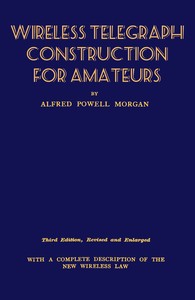
Authored by Authors: Morgan, Alfred Powell, 18..., 'Wireless Telegraph Construction ...' stands as a notable and significant work within the Civil Engineering category. Alfred Powell Morgan's 1914 manual guides amateur experimenters in building wireless telegraph instruments, emphasizing practical construction over theory. The book details detectors, coils, and aerials with clear drawings, cautioning against impatience and burn-outs. It serves as a vital entry point into the broader subjects represented in our archive.
View catalogue record
Routes through the collection
Four routes into the collection for readers approaching the catalogue with different questions.
Record framework
Find out how records are presented and linked without changing the content of the source texts.
Connect catalogue entries with the files and references currently accessible.
Display clear titles, authors, and edition details to help you identify works.
Organize works by recurring subjects, historical settings, and engineering questions.
Show how records relate to one another while preserving the original wording of source texts.
About these records
How the collection is organized, presented and corrected.
It generally means that the represented source text is no longer protected by copyright in the applicable jurisdiction or has been released for public use. Status may vary by country and edition.
A record may include the title, author, category, cover, description, edition information, source references and available reading or download options.
A category reflects a work’s principal subjects, literary setting, source type and relationship to nearby records in the collection.
The catalogue adds navigation, metadata and editorial context. The represented source text retains its wording, edition information and rights status.
Use the contact page and include the work title, page address and the exact attribution, category, metadata or source detail requiring attention.
Catalogue stewardship
Catalogue information
This catalogue is organized using source attribution, bibliographic metadata, subject-based categories, and supplementary contextual notes. Submitted corrections may be used to update catalogue records.