About 47 minutes
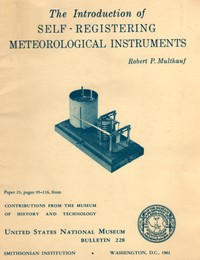
The Introduction of Self-Registering Meteorological Instruments — Reading Notes
Mechanical Engineering
10,722 recorded words. 28 minutes difference from this book's estimate.
View Gutenberg source #32482

U.S. Patent 4,293,314: Gelled Fuel-Air Explosive October 6, 1981. — Key Ideas to Explore can be approached with a clearer sense of reading commitment from its source measurements: 4,241 words, 19 min estimated reading time, and 1 detected text section.
The text analysis averages about 20.1 words per sentence, while the detected sections provide another way to judge how the source is divided.
Project Gutenberg metadata also associates the work with “Explosives,” connecting these edition facts with the source record’s subject description.
Explore this collection
These alternatives are selected using recorded categories and estimated reading time.
About 47 minutes
Mechanical Engineering
10,722 recorded words. 28 minutes difference from this book's estimate.
View Gutenberg source #32482About 47 minutes
Mechanical Engineering
10,738 recorded words. 28 minutes difference from this book's estimate.
View Gutenberg source #66951About 55 minutes
Mechanical Engineering
12,600 recorded words. 36 minutes difference from this book's estimate.
View Gutenberg source #48360Search stored excerpts and compare books → Choose by your preferences →
Choices use stored catalog measurements. Estimates vary with reading speed. A shared category is a catalog label, not a claim that two books have the same argument or literary quality.
Search reads excerpt text stored with this catalog and links to its associated Gutenberg record. The connection is stored in the site database; this tool does not recheck that every excerpt is word-for-word identical to that external record. Excerpt search does not cover every chapter and does not verify historical publication dates.
Catalog snapshot checked: 2026-09-26. Coverage: 91 public books, 91 available source excerpts.
Calculated from edition completeness, EPUB availability, text structure and catalogue metadata. Not a user rating.
Total of 100 points, scaled to a 2.5-5.0 range. Editions with an empty description or a missing EPUB file are not scored.
Public-domain source text
The source text is kept in the dedicated reader, separate from this catalogue record and its commentary.
U.S. Patent 4,293,314 opens with a formal declaration of invention, immediately establishing a structure that alternates between technical description and legal citation. The patent's movement from the abstract to the background of the invention reveals a recurring pattern: each section begins with a broad statement of purpose, then narrows to specific claims. The language is precise, with phrases like "gelled or ungelled 1,2-butylene oxide" repeated to emphasize the core innovation. The setting is entirely textual, defined by patent classifications and references to prior art, creating a self-contained world of chemical and legal reasoning.
The patent is organized into distinct sections—Abstract, Background, Summary, Detailed Description, and Claims—each serving a specific rhetorical function. The Abstract condenses the invention into a single sentence, while the Background reviews prior patents, such as U.S. Pat. No. 3,955,509, to establish a problem. This problem-solution structure is mirrored in the Claims, which list the invention's components in a numbered sequence. The repetition of key terms like "fuel air explosive" and "detonating the cloud" across sections reinforces the patent's central argument without introducing new information. The movement is linear but recursive: each section revisits the same core idea from a different angle, building a cumulative case for the novelty of 1,2-butylene oxide.
Throughout the patent, two images recur: the dispersion of a liquid fuel cloud and its subsequent detonation. The text describes "dispersing a cloud of liquid fuel in the air" and then "detonating the cloud," creating a visual of particles suspended in space before ignition. This imagery is tied to the physical properties of the fuel, such as its toxicity and volatility, which are contrasted with ethylene oxide and propylene oxide. The patent uses these comparisons to highlight the advantages of 1,2-butylene oxide, particularly its lower toxicity. The repeated mention of "gelled" fuel introduces another image: a thickened, semi-solid state that alters the cloud's behavior. These images are not merely descriptive but serve to differentiate the invention from prior art.
The patent's movement between prior art and novelty is a key structural feature. The Background section cites several earlier patents, including U.S. Pat. No. 3,539,311 and U.S. Pat. No. 3,634,157, establishing a lineage of fuel-air explosive technology. The text then pivots to identify drawbacks in these prior fuels—toxicity and storage concerns—before introducing 1,2-butylene oxide as a solution. This back-and-forth creates a dialectical rhythm: problem, prior attempts, new solution. The patent also references specific chemical agents like "silicon dioxide, particulate carbon or aluminum octoate" as gelling agents, grounding the novelty in concrete materials. The movement is not just temporal but logical, guiding the reader from known to unknown.
The patent's language oscillates between legal formalism and technical specificity. Legal phrases such as "United States Patent [19] Stull [11] 4,293,314" and "Assignee: The United States of America as represented by the Secretary of the Navy" frame the document as a legal instrument. Technical terms like "1,2-butylene oxide" and "gelled fuel-air explosive method" are defined precisely, often with chemical formulas or physical properties. This dual register creates a hybrid text that must satisfy both patent examiners and chemists. The recurring use of passive voice—"may be used," "is described," "are known"—adds an impersonal tone, emphasizing objectivity. The structure itself, with its numbered paragraphs and headings, mirrors legal documents, reinforcing the patent's authority.
Readers approaching this patent should attend to its layered structure: the abstract, background, and claims each serve a distinct purpose, yet together they form a coherent argument for the invention's novelty. The recurring images of cloud dispersion and detonation provide a visual anchor in an otherwise abstract text. By tracing how the patent moves between prior art and its own claims, one can appreciate the rhetorical strategy behind technical writing.
Somewhere between a patent’s cold diagrams and the Panama Canal’s grand mud, I’ve often found a quiet kinship—both are human dreams layered in stubborn detail. A gelled explosive’s slow burn, the canal’s patient lock-filling; each page turns like a laborer’s steady shovel. Years later, I still recall Stull’s formula alongside the sea-level route in The Panama Canal: A history and description of the enterprise — Inside the Classic, two old friends whispering of controlled forces.
A brief reflection can help important ideas stay with you longer.