About 58 minutes
The Auburndale Watch Company — Story, Setting & Ideas
Mechanical Engineering
13,278 recorded words. 3 minutes difference from this book's estimate.
View Gutenberg source #29934
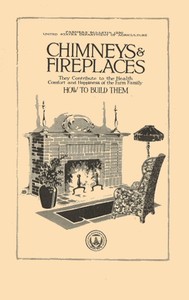
This digital edition of Chimneys & Fireplaces They Contribute to the Health Comfort and Happiness of the Farm Family - How to Build Them — A Closer Reading is described by source-level measurements including 12,600 words, 55 min estimated reading time, and 2 detected text sections.
The text analysis averages about 21.6 words per sentence, while the detected sections provide another way to judge how the source is divided.
Project Gutenberg metadata also associates the work with “Fireplaces,” connecting these edition facts with the source record’s subject description.
Explore this collection
These alternatives are selected using recorded categories and estimated reading time.
About 58 minutes
Mechanical Engineering
13,278 recorded words. 3 minutes difference from this book's estimate.
View Gutenberg source #29934About 47 minutes
Mechanical Engineering
10,722 recorded words. 8 minutes difference from this book's estimate.
View Gutenberg source #32482About 47 minutes
Mechanical Engineering
10,738 recorded words. 8 minutes difference from this book's estimate.
View Gutenberg source #66951Search stored excerpts and compare books → Choose by your preferences →
Choices use stored catalog measurements. Estimates vary with reading speed. A shared category is a catalog label, not a claim that two books have the same argument or literary quality.
Search reads excerpt text stored with this catalog and links to its associated Gutenberg record. The connection is stored in the site database; this tool does not recheck that every excerpt is word-for-word identical to that external record. Excerpt search does not cover every chapter and does not verify historical publication dates.
Catalog snapshot checked: 2026-09-26. Coverage: 91 public books, 91 available source excerpts.
Calculated from edition completeness, EPUB availability, text structure and catalogue metadata. Not a user rating.
Total of 100 points, scaled to a 2.5-5.0 range. Editions with an empty description or a missing EPUB file are not scored.
Public-domain source text
The source text is kept in the dedicated reader, separate from this catalogue record and its commentary.
This 1921 Farmers' Bulletin, written by A. M. Daniels of the Bureau of Public Roads, opens with a blunt claim: 'no defect in the construction of the house detracts more from the comfort of the home and none is a greater menace to life and property than a poor chimney and fireplace.' The bulletin is addressed to the farmer or rural resident who builds or supervises his own home, and it aims to provide a 'working knowledge' of principles often misunderstood even by experienced masons. The catalog subjects—Fireplaces and Chimneys—are accurate, but the excerpts reveal a narrower focus: the bulletin is less about decorative hearths and more about the physics of draft, the geometry of flues, and the precise masonry details that prevent smoke, waste fuel, and fire.
The bulletin treats the chimney primarily as a machine for producing draft. Daniels states that 'the prime function of a chimney is to produce a draft that will cause sufficient combustion and carry off the resulting smoke.' This mechanical framing is consistent throughout the excerpts. The text repeatedly links poor draft to specific construction errors—oversized flues, rough interior walls, and improper throat width. For example, the author notes that 'many unsatisfactory heating plants and much excessive fuel consumption are due to improperly constructed chimneys, which are the rule rather than the exception.' The bulletin does not romanticize the fireplace; it treats it as an engineering problem where the goal is controlled airflow, not ambiance.
No part of the fireplace receives more scrutiny than the throat—the narrow passage between the firebox and the smoke chamber. Daniels insists that 'proper throat construction is so necessary to a successful fireplace that the work should be carefully watched.' The width must not exceed 4 inches, and the side walls must remain perpendicular until the throat is passed. The bulletin warns that masons often ignore these details, and it advises the builder to 'inspect the work several times a day as it progresses.' The smoke shelf and smoke chamber are presented as essential complements: the shelf redirects down drafts, while the chamber acts as a temporary reservoir for smoke when wind gusts cut off the draft. The text is emphatic that the shelf should not be bricked up, a common mistake.
The bulletin devotes a section to the throat damper, a cast-iron frame with a hinged lid that regulates the opening from zero to 6 inches. Daniels explains that different fires require different openings: 'A roaring pine fire requires a full throat opening, but slow-burning hardwood logs require but 1 or 2 inches of opening.' The damper also serves to close the chimney completely in summer, keeping out insects. In houses with modern heating systems, the bulletin notes that fireplaces without dampers 'interfere with even heating, particularly in very cold weather.' This practical advice reflects the bulletin's audience: rural homeowners who might rely on multiple heating sources and need to manage their chimney's performance across seasons.
Readers should approach this bulletin as a period-specific technical manual, not a general guide to fireplace aesthetics. The excerpts show a strong emphasis on measurement—inches of throat width, depth of smoke shelf, height of chimney—and a distrust of masons' habits. The text is prescriptive and assumes the reader is both builder and inspector. Those interested in historical construction methods or the evolution of home heating will find the bulletin's concrete details valuable, but it offers little on decorative styles or regional variations.
There is something touching about old farm bulletins, their careful warnings about draft and throat design. Reading about faulty chimneys, how a small error invited disaster, I remembered holding my grandfather’s guide to lightning rods. Both books whisper the same quiet truth: that a home’s safety rests on humble, invisible craftsmanship. I found myself turning again to Lightning Conductors: Their History, Nature, and Mode of Application — A Reader’s Guide afterward, just to feel that same steadying certainty.
Use these questions to collect your thoughts before moving on.