About 47 minutes
Wireless Possibilities — A Closer Reading
Mechanical Engineering
10,738 recorded words. 0 minutes difference from this book's estimate.
View Gutenberg source #66951
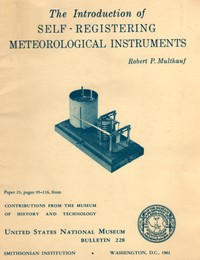
The source record for The Introduction of Self-Registering Meteorological Instruments — Reading Notes measures this digital text at 10,722 words, 47 min estimated reading time, and 2 detected text sections.
The text analysis averages about 20.5 words per sentence, while the detected sections provide another way to judge how the source is divided.
Project Gutenberg metadata also associates the work with “Meteorological instruments,” connecting these edition facts with the source record’s subject description.
Explore this collection
These alternatives are selected using recorded categories and estimated reading time.
About 47 minutes
Mechanical Engineering
10,738 recorded words. 0 minutes difference from this book's estimate.
View Gutenberg source #66951About 55 minutes
Mechanical Engineering
12,600 recorded words. 8 minutes difference from this book's estimate.
View Gutenberg source #48360About 58 minutes
Mechanical Engineering
13,278 recorded words. 11 minutes difference from this book's estimate.
View Gutenberg source #29934Search stored excerpts and compare books → Choose by your preferences →
Choices use stored catalog measurements. Estimates vary with reading speed. A shared category is a catalog label, not a claim that two books have the same argument or literary quality.
Search reads excerpt text stored with this catalog and links to its associated Gutenberg record. The connection is stored in the site database; this tool does not recheck that every excerpt is word-for-word identical to that external record. Excerpt search does not cover every chapter and does not verify historical publication dates.
Catalog snapshot checked: 2026-09-26. Coverage: 91 public books, 91 available source excerpts.
Calculated from edition completeness, EPUB availability, text structure and catalogue metadata. Not a user rating.
Total of 100 points, scaled to a 2.5-5.0 range. Editions with an empty description or a missing EPUB file are not scored.
Public-domain source text
The source text is kept in the dedicated reader, separate from this catalogue record and its commentary.
Multhauf opens with a striking claim: self-registering meteorological instruments emerged two centuries after scientific observation began, not because of technical shortcomings but due to deficiencies in the organization of meteorology itself. The critical catalyst, he argues, was the establishment of well-financed observatories in the 1860s, often attached to astronomical institutions. This framing immediately shifts attention from individual inventors to institutional structures, setting up a narrative that prioritizes the sociology of science over a simple chronology of gadgets.
The first paragraphs establish a clear thesis: the delay in self-registration was less about instrument-making than about meteorology's organizational weakness. Multhauf grounds this in the 17th-century flowering of science, citing Galileo's thermoscope and the work of Castelli and Santorio. Yet he notes that even with early rain gauges and hygrometers, systematic recording did not take hold. The reader is led to expect that the narrative will explain how observatories finally provided the necessary funding and direction.
By the 1860s, observatory directors launched a mass attack on self-registration. Multhauf describes six systems used by the U.S. Signal Corps, calling them "a panoply of gadgetry which must have been wondrous to behold." He notes the Secci meteorograph cost 15,000 francs and was kept as a "fascinating show to visitors." These details reveal a tension between serious science and spectacle. The excerpts also show how inventors adapted existing technologies: Beckley and Draper used gearing for cup-anemometers, while others employed electromagnetic counters.
After 1875, the focus moved from introduction to mechanization and extension to substations. Multhauf highlights Jules Richard's 1880 innovation: a self-registering barometer and thermometer using Bourdon's curved metal tube from steam gauges. Richard filled the tube with alcohol, creating a simple, friction-resistant mechanism. By 1900, these inexpensive instruments had "relegated to the scrap pile" the elegant but complex products of the 1860s. This reversal—from elaborate observatory devices to practical, mass-produced tools—forms a key arc in the narrative.
The text is punctuated by references to figures—Smithsonian instruments, charts from Secci's meteorograph, and various barometers. These are not mere decoration; they anchor the argument in material evidence. Multhauf also draws on contemporary reports, such as Abbe's 1894 remark that old instruments were kept as a "stimulation to the staff." The author's position as head curator at the Smithsonian lends authority, but the excerpts show he relies on primary sources like Hutton's dictionary and Loewenherz's catalog. Readers should note how the illustrations support the thesis of a shift from complexity to simplicity.
Multhauf's monograph rewards readers who pay attention to its central argument about institutional inertia. The excerpts suggest a story that moves from early Italian inventors to 19th-century observatory directors, then to the triumph of simple, robust designs. The illustrations are integral, not optional. A first-time reader should focus on how Multhauf connects technical details to broader organizational changes, and note that the conclusion likely reinforces the theme of simplification as a product of practical necessity rather than theoretical advance.
I remember Multhauf noting how patient instruments waited a quiet century before learning to write their own records—how observation outstripped the humble urge to preserve it. That same homely patience lives in Practical Methods of Sewage Disposal for Residences, Hotels and Institutions — Themes and Context, a book about unglamorous, necessary care. Both whisper the same truth: we measure, then slowly mend what we have watched.
Save your reaction, strongest insight, and memorable passage.