About 75 minutes
The Early History of the Airplane — Key Ideas to Explore
Inventions Industry
17,198 recorded words. 2 minutes difference from this book's estimate.
View Gutenberg source #25420
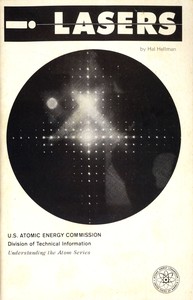
The source record for Lasers — A Reader’s Guide measures this digital text at 16,672 words, 1 hr 13 min estimated reading time, and 3 detected text sections.
The text analysis averages about 18.0 words per sentence, while the detected sections provide another way to judge how the source is divided.
Project Gutenberg metadata also associates the work with “Lasers,” connecting these edition facts with the source record’s subject description.
Explore this collection
These alternatives are selected using recorded categories and estimated reading time.
About 75 minutes
Inventions Industry
17,198 recorded words. 2 minutes difference from this book's estimate.
View Gutenberg source #25420About 76 minutes
Inventions Industry
17,327 recorded words. 3 minutes difference from this book's estimate.
View Gutenberg source #31023About 67 minutes
Inventions Industry
15,365 recorded words. 6 minutes difference from this book's estimate.
View Gutenberg source #27238Search stored excerpts and compare books → Choose by your preferences →
Choices use stored catalog measurements. Estimates vary with reading speed. A shared category is a catalog label, not a claim that two books have the same argument or literary quality.
Search reads excerpt text stored with this catalog and links to its associated Gutenberg record. The connection is stored in the site database; this tool does not recheck that every excerpt is word-for-word identical to that external record. Excerpt search does not cover every chapter and does not verify historical publication dates.
Catalog snapshot checked: 2026-09-26. Coverage: 91 public books, 91 available source excerpts.
Calculated from edition completeness, EPUB availability, text structure and catalogue metadata. Not a user rating.
Total of 100 points, scaled to a 2.5-5.0 range. Editions with an empty description or a missing EPUB file are not scored.
Public-domain source text
The source text is kept in the dedicated reader, separate from this catalogue record and its commentary.
Hal Hellman opens Lasers with a comparison to the transistor, noting that the laser was predicted to have an even greater effect on our lives. His prose balances technical explanation with accessible analogies, as when he describes using a laser for large-scale welding as like washing a floor with a toothbrush. The book, part of the Atomic Energy Commission's Understanding the Atom Series, aims to inform a general audience about a then-recent invention.
Hellman frequently employs everyday comparisons to clarify laser properties. He explains coherence by contrasting laser light with ordinary light, and he illustrates the laser's precision by noting that a 2-mile-long accelerator bore must stay straight within 1/32 inch. His most vivid analogy dismisses the idea of laser-welding bridge girders: it would be like washing a floor with a toothbrush. Such choices reveal a deliberate effort to ground unfamiliar concepts in common experience.
The author's word choices emphasize exactness and magnitude. He describes the laser beam as an enormously intense pencil-thin beam of light and calls the alignment task incredible. Terms like lilliputian surgical knife and arrow-straight (which he notes is not good enough) show his care in selecting language that conveys both the scale and the novelty of laser applications. His description of the linear accelerator's alignment system uses concrete numbers—2 miles, 7/8 inch bore, 1/32 inch tolerance—to ground the marvel in measurable fact.
Hellman organizes the book to build understanding step by step. He begins with the electromagnetic spectrum, then moves to radio waves, light and the atom, and the concept of coherent light before introducing the laser itself. This progression mirrors a logical curriculum. Within chapters, he often poses a question or a common misconception—such as whether lasers will weld bridge members—and then answers it, correcting potential misunderstandings. The structure itself reinforces the idea that lasers are not magic but a logical extension of known physics.
As a publication of the U.S. Atomic Energy Commission, the book carries an institutional tone, but Hellman's voice remains approachable. He uses we and us, as in Most of us have heard so much about this invention, creating a sense of shared discovery. The foreword by Edward J. Brunenkant frames the series as essential for citizens, and Hellman's text fulfills that mission by explaining not just how lasers work but why they matter. His closing suggestion that lasers might one day be in every home reflects the optimistic, educational spirit of the series.
Hellman's Lasers rewards readers who pay attention to his analogies and structural choices. The book is best read as a period piece of science communication, where the author's task was to make the unfamiliar familiar without oversimplifying. His careful diction and step-by-step exposition offer a model of how to explain complex technology to a lay audience.
That laser book made me notice how carefully a writer can hold your hand through something intricate, making the strange feel almost familiar. It reminded me of the quiet patience in Aviation in Peace and War — A Closer Reading. Both left me with the warm feeling of having understood something I never expected to. A nice thing to carry around afterward.
A brief reflection can help important ideas stay with you longer.