About 76 minutes
The First Airplane Diesel Engine: Packard Model DR-980 of 1928 — A Reader’s Guide
Inventions Industry
17,327 recorded words. 1 minutes difference from this book's estimate.
View Gutenberg source #31023
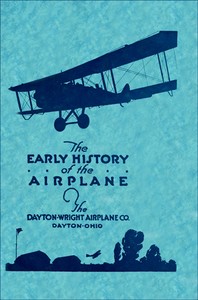
This digital edition of The Early History of the Airplane — Key Ideas to Explore is described by source-level measurements including 17,198 words, 1 hr 15 min estimated reading time, and 2 detected text sections.
The text analysis averages about 25.1 words per sentence, while the detected sections provide another way to judge how the source is divided.
Project Gutenberg metadata also associates the work with “Airplanes,” connecting these edition facts with the source record’s subject description.
Explore this collection
These alternatives are selected using recorded categories and estimated reading time.
About 76 minutes
Inventions Industry
17,327 recorded words. 1 minutes difference from this book's estimate.
View Gutenberg source #31023About 73 minutes
Inventions Industry
16,672 recorded words. 2 minutes difference from this book's estimate.
View Gutenberg source #65512About 67 minutes
Inventions Industry
15,365 recorded words. 8 minutes difference from this book's estimate.
View Gutenberg source #27238Search stored excerpts and compare books → Choose by your preferences →
Choices use stored catalog measurements. Estimates vary with reading speed. A shared category is a catalog label, not a claim that two books have the same argument or literary quality.
Search reads excerpt text stored with this catalog and links to its associated Gutenberg record. The connection is stored in the site database; this tool does not recheck that every excerpt is word-for-word identical to that external record. Excerpt search does not cover every chapter and does not verify historical publication dates.
Catalog snapshot checked: 2026-09-26. Coverage: 91 public books, 91 available source excerpts.
Calculated from edition completeness, EPUB availability, text structure and catalogue metadata. Not a user rating.
Total of 100 points, scaled to a 2.5-5.0 range. Editions with an empty description or a missing EPUB file are not scored.
Public-domain source text
The source text is kept in the dedicated reader, separate from this catalogue record and its commentary.
The Wright brothers open their account not with a workshop or patent office, but with a childhood memory: their father tossing a toy “helicoptere” into the air one autumn evening in 1878. The toy, which they promptly called a “bat,” fluttered across the room and left an abiding impression. This personal origin story sets the tone for a narrative that moves fluidly between the intimate and the technical. The brothers describe building ever-larger versions of the toy, only to discover that doubling size required eight times the power—a lesson in scaling that would prove central to their later work.
The excerpts reveal a distinctive voice: direct, understated, and precise. When Orville recounts the first flight, he notes that it lasted only 12 seconds but was “the first in the history of the world” in which a machine carrying a man raised itself by its own power, sailed forward without losing speed, and landed at a point as high as its start. The claim is matter-of-fact, grounded in measured distances and wind speeds.
The brothers’ early experiments with toy helicopteres taught them a hard lesson in scaling: a machine with twice the linear dimensions required eight times the power. Discouraged, they returned to kite-flying, a sport at which they became experts. The narrative traces a clear arc from idle curiosity to active zeal, catalyzed by news of Otto Lilienthal’s death in 1896. They then immersed themselves in the existing literature—Chanute, Langley, and the Aeronautical Annuals—which gave them “a good understanding of the nature of the flying problem.”
Wilbur’s essay “Some Aeronautical Experiments” divides the obstacles into three classes: sustaining wings, power generation and application, and balancing and steering. He notes that the first two were already partly solved, but the third—control—remained the crux. This framing reveals the brothers’ analytical approach: they did not merely build, they identified the unsolved problem and attacked it systematically.
The Wrights explicitly align themselves with the “soaring flight” school of Lilienthal, Mouillard, and Chanute, as opposed to the “power flight” school of Langley and Maxim. This is not a casual preference; it reflects impatience with the prevailing emphasis on engines over control. The excerpts show them studying Mouillard’s “Empire of the Air” and Lilienthal’s articles, which “infected us with their own unquenchable enthusiasm.”
The distinction is crucial to understanding their approach. While others sought more powerful engines, the Wrights focused on balance and steering. Wilbur’s classification of difficulties makes this explicit: the first two classes (wings and power) were already understood; the third—balancing and steering—was the true barrier. This insight shaped their entire design philosophy and ultimately led to their success at Kitty Hawk.
Orville’s account of the four flights on December 17, 1903, is remarkably restrained. He records wind speeds, distances, and durations with the detachment of a logbook entry. The first flight lasted 12 seconds and covered 120 feet; the second was slightly longer; the third, 15 seconds and 200 feet; the fourth, 59 seconds and 852 feet. Yet the narrative is punctuated by moments of drama: a sudden gust lifts the machine “twelve to fifteen feet and turned it up sidewise”; Wilbur’s final flight ends when the machine “struck the ground.”
After the last flight, a gust of wind caught the machine and rolled it over repeatedly, injuring a bystander and ending further flights for the year. Orville’s tone remains even: “All our efforts were vain.” The juxtaposition of triumph and anticlimax—the first powered flight followed by a wreck—underscores the fragility of early aviation. The brothers present their achievement not as a mythic breakthrough but as a measured step, grounded in data and hard-won experience.
The Wrights’ own writing offers a rare window into the mindset that solved one of the great engineering problems of the age. Readers will find no grand theories here, only patient observation and incremental progress. The excerpts suggest that the brothers’ greatest innovation may have been their method: identifying the critical unsolved problem—control—and refusing to be distracted by the allure of raw power. For those interested in how invention actually happens, this account is invaluable.
Reading the Wrights’ boyhood toy helicopter reminded me of my father’s old paper mill ledger, its pages soft as cloth. He never flew, but he spoke of pulp the way they speak of wind—patient, structural, waiting. That same quiet awe surfaced later in A Text-book of Paper-making — A Reader’s Guide, where fiber and water felt like a kind of first flight.
A brief reflection can help important ideas stay with you longer.