
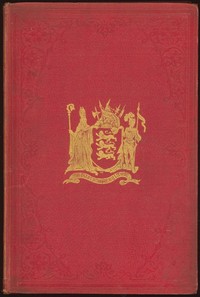
The History of England in Three Volumes, Vol. I., Part F. by David Hume
Let's be clear: this isn't a light beach read. David Hume's History of England is a foundational work, but don't let that scare you off. This first volume covers the ground from the ancient Britons all the way through to the reign of Henry VII, the first Tudor king. That's a lot of ground, from Roman invasions and Saxon kingdoms to the drama of the Norman Conquest and the brutal Wars of the Roses.
The Story
Hume doesn't just tell you what happened; he tries to explain why. He moves through the reigns of famous and infamous figures—Alfred the Great, William the Conqueror, Richard the Lionheart, King John—showing how their personalities and decisions shaped the nation. The story is one of constant struggle: for power, for land, for religious authority. It's about how a collection of warring tribes and feudal lords slowly, messily, became something resembling a single country. The through-line is the evolution of English law and government, often born from conflict and compromise.
Why You Should Read It
You read this for Hume's voice. He's a philosopher first, and it shows. He questions motives, points out contradictions, and isn't afraid to call a bad king a tyrant. Reading him feels active, like you're in a conversation. He makes you think about cause and effect in history. Sure, some of his 18th-century perspectives feel dated now, but that's part of the fascination. You're getting a double history lesson: one about medieval England, and one about how an Enlightenment thinker viewed the past.
Final Verdict
This is perfect for anyone curious about English history who finds standard textbooks a bit dry. It's for the reader who wants to understand the 'why' behind the dates. If you enjoy biographies of kings or shows like The Last Kingdom or The White Queen, this is the deep, primary-source-adjacent background that makes those stories richer. It requires a bit of focus, but the reward is a masterclass in narrative history from one of Britain's sharpest minds. Just be prepared to see history as a story, not just a list of facts.
This title is part of the public domain archive. Distribute this work to help spread literacy.
William Allen
11 months agoSolid story.
Aiden Jones
8 months agoAfter finishing this book, the storytelling feels authentic and emotionally grounded. Worth every second.
Kimberly Flores
8 months agoAmazing book.






Oliver White
1 year agoRecommended.