About 70 minutes
The 1893 Duryea Automobile In the Museum of History and Technology — Edition Insights
Electrical Technology
16,073 recorded words. 6 minutes difference from this book's estimate.
View Gutenberg source #30055
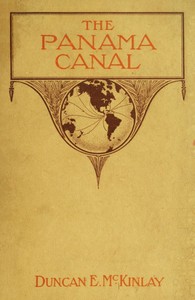
The catalog record for The Panama Canal — Key Ideas to Explore provides practical reading context through 14,682 words, 1 hr 4 min estimated reading time, and 3 detected text sections.
The text analysis averages about 29.7 words per sentence, while the detected sections provide another way to judge how the source is divided.
Project Gutenberg metadata also associates the work with “Panama Canal (Panama),” connecting these edition facts with the source record’s subject description.
Explore this collection
These alternatives are selected using recorded categories and estimated reading time.
About 70 minutes
Electrical Technology
16,073 recorded words. 6 minutes difference from this book's estimate.
View Gutenberg source #30055About 58 minutes
Electrical Technology
13,175 recorded words. 6 minutes difference from this book's estimate.
View Gutenberg source #76407About 52 minutes
Electrical Technology
11,941 recorded words. 12 minutes difference from this book's estimate.
View Gutenberg source #38758Search stored excerpts and compare books → Choose by your preferences →
Choices use stored catalog measurements. Estimates vary with reading speed. A shared category is a catalog label, not a claim that two books have the same argument or literary quality.
Search reads excerpt text stored with this catalog and links to its associated Gutenberg record. The connection is stored in the site database; this tool does not recheck that every excerpt is word-for-word identical to that external record. Excerpt search does not cover every chapter and does not verify historical publication dates.
Catalog snapshot checked: 2026-09-26. Coverage: 91 public books, 91 available source excerpts.
Calculated from edition completeness, EPUB availability, text structure and catalogue metadata. Not a user rating.
Total of 100 points, scaled to a 2.5-5.0 range. Editions with an empty description or a missing EPUB file are not scored.
Public-domain source text
The source text is kept in the dedicated reader, separate from this catalogue record and its commentary.
Duncan E. McKinlay, a California congressman who visited the Canal Zone with the House Interstate Committee, frames the Panama Canal as a project of paramount importance to the Pacific coast and the realization of Columbus's dream. His 1912 account, published before the canal's 1915 opening, blends boosterism with detailed observations of the engineering and public health challenges faced by American authorities.
The excerpts reveal a text that is as much about disease control as excavation. McKinlay devotes significant attention to the sanitation campaign led by Dr. W. C. Gorgas, describing the war on mosquitoes—the stegomyia and anopheles—that spread yellow fever and malaria. This focus on medical infrastructure, rather than just locks and cuts, distinguishes the narrative from purely technical reports.
McKinlay opens by asserting the canal's supreme importance to California and the Pacific territories, arguing it will end centuries of isolation. He invokes Humboldt's prophecy that the United States would build the waterway, and credits Seward's Alaska purchase as foresight. The author's position as a congressman colors his rhetoric: the canal is presented as a national destiny fulfilled, with San Francisco's celebration already anticipated. This political framing, however, does not extend to detailed policy analysis; the excerpts focus on inspirational history rather than legislative debate.
The most vivid passages detail the health crisis that preceded American control. McKinlay contrasts French mismanagement—where laborers slept on the ground and ate improperly—with the U.S. approach under Dr. Gorgas. He describes the systematic clearing of vegetation, draining of marshes, and use of petroleum to destroy mosquito breeding grounds. The text notes that the odor of petroleum could be detected a hundred miles at sea when approaching Colón. This sensory detail grounds the account in tangible experience, though McKinlay does not claim to have witnessed these conditions firsthand.
McKinlay recounts the scientific background of the mosquito-borne disease theory, crediting Dr. Reed's fatal self-experiment and Dr. Gorgas's subsequent work. He distinguishes between the stegomyia (yellow fever) and anopheles (malaria) mosquitoes, noting their limited flight range of under a quarter mile. The narrative treats the sanitation campaign as a heroic triumph of applied science, but the excerpts do not provide mortality statistics or compare outcomes with the French period. The account remains a layman's tribute rather than a clinical report.
McKinlay's book offers a snapshot of the canal's construction from a political and popular-science perspective, emphasizing the sanitation campaign as a prerequisite for progress. Readers interested in engineering details or post-1914 operations will need supplementary sources. The text's value lies in its contemporary voice—a congressman's view of a project he frames as the fulfillment of centuries-old dreams, with mosquitoes as the unlikely antagonists.
There’s something oddly moving about a 1912 visitor marveling at the mosquito war in Panama, all that methodical scrubbing against invisible enemies. It makes me think of the quiet craft in a Soap-Making Manual A Practical Handbook on the Raw Materials, Their Manipulation, Analysis and Control in the Modern Soap Plant. — Text and Context—how the plainest tools, lye and glycerin, held their own power to make the world safer.
Capture what you thought, learned, and would like to remember.