About 210 minutes
A Manual of Shoemaking and Leather and Rubber Products — A Reader’s Guide
Inventions Industry
48,285 recorded words. 0 minutes difference from this book's estimate.
View Gutenberg source #55474
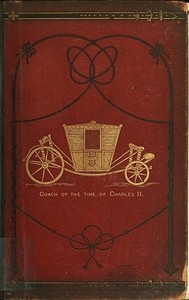
The History of Coaches — A Reader’s Guide can be approached with a clearer sense of reading commitment from its source measurements: 48,166 words, 3 hr 30 min estimated reading time, and 7 detected text sections.
The text analysis averages about 24.1 words per sentence, while the detected sections provide another way to judge how the source is divided.
Project Gutenberg metadata also associates the work with “Carriages and carts,” connecting these edition facts with the source record’s subject description.
Explore this collection
These alternatives are selected using recorded categories and estimated reading time.
About 210 minutes
Inventions Industry
48,285 recorded words. 0 minutes difference from this book's estimate.
View Gutenberg source #55474About 213 minutes
Inventions Industry
48,872 recorded words. 3 minutes difference from this book's estimate.
View Gutenberg source #1445About 207 minutes
Inventions Industry
47,609 recorded words. 3 minutes difference from this book's estimate.
View Gutenberg source #17740Search stored excerpts and compare books → Choose by your preferences →
Choices use stored catalog measurements. Estimates vary with reading speed. A shared category is a catalog label, not a claim that two books have the same argument or literary quality.
Search reads excerpt text stored with this catalog and links to its associated Gutenberg record. The connection is stored in the site database; this tool does not recheck that every excerpt is word-for-word identical to that external record. Excerpt search does not cover every chapter and does not verify historical publication dates.
Catalog snapshot checked: 2026-09-26. Coverage: 91 public books, 91 available source excerpts.
Calculated from edition completeness, EPUB availability, text structure and catalogue metadata. Not a user rating.
Total of 100 points, scaled to a 2.5-5.0 range. Editions with an empty description or a missing EPUB file are not scored.
Public-domain source text
The source text is kept in the dedicated reader, separate from this catalogue record and its commentary.
Thrupp opens his 1877 lectures by acknowledging the difficulty of reconstructing early vehicle shapes from vague descriptions and limited pictorial evidence. He writes that both time and opportunities were limited to a few months, and he suspects richer mines of information remain unsearched. This candor sets a practical, evidence-based tone: the book is less a definitive history than a provisional survey grounded in the author's examination of paintings, engravings, and technical literature.
The narrative moves from ancient wicker waggons still used in Germany to the sophisticated carriages of the 1820s. Thrupp details how the briska, introduced from Austria around 1818, retained a nearly straight bottom line reminiscent of those wicker vehicles. He traces the evolution of springs: elliptical springs proved insufficient on bad roads, so horizontal springs were added below C springs to relieve the perch and beds from direct concussions. The adoption of Collinge's patent axles, first made in 1792, is presented as a slow process—their high price initially hindered use, but the advantage of carrying oil for two or three months and avoiding daily greasing gradually secured universal adoption after the patent expired.
Thrupp devotes considerable attention to Samuel Hobson, whom he credits with the greatest improvements in shape and style beginning in 1820. Hobson lowered coach wheels to 3 ft 3 in. front and 4 ft 5 in. rear, lengthened the carriage part to proportions that later generations approved, and lowered the body so that a moderate double step replaced the three-fold ladder. He perfected curves of bodies and springs and refined numberless small details. Thrupp notes that Hobson learned his art at Barker and Co., rose to partner, then left around 1815 to set up in Long Acre, moving to Hatchett's former premises about 1824. The trade copied him as they had copied his predecessor Hatchett in 1780.
Thrupp describes the proliferation of two-wheeled carriages, including the Dennett, invented by Mr. Bennett of Finsbury as an improvement on the 1790 whisky or gig. The Stanhope, built under the Hon. Fitzroy Stanhope's superintendence by Tilbury, was shaped like the old rib gig but hung on four springs—two bolted between shafts and axle, two crossways parallel to the axle. Thrupp observes that Stanhopes are very easy and do not rock as much as other gigs behind a rough-trotting horse, but are heavier because iron plates are needed all round the shafts. The Tilbury itself is mentioned as an easy vehicle, though its construction details are not fully elaborated in the excerpt.
Thrupp's account is richest when he balances technical description with the practical constraints of materials and patronage. Readers attentive to the interplay between artisan innovation and aristocratic taste will find the most reward. The book's value lies less in a continuous narrative than in its accumulation of specific mechanical solutions and the names of the builders who devised them.
Thrupp’s careful fingers tracing a spring’s arc always reminded me of how quietly we learn to measure our own time. His coaches roll smoother with every page, and I find myself thinking of Every-day Science: Volume 7. The Conquest of Time and Space — Reading Notes, that other patient volume, both whispering that distance is merely patience with a destination.
A brief reflection can help important ideas stay with you longer.