About 46 minutes
Report on the Department of Ports and Harbours for the Year 1890-91 — Story, Setting & Ideas
Inventions Industry
10,479 recorded words. 2 minutes difference from this book's estimate.
View Gutenberg source #24442
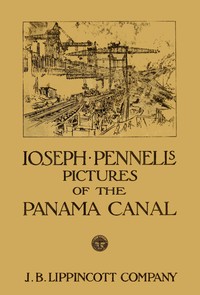
Before opening Joseph Pennell's pictures of the Panama Canal Reproductions of a series of lithographs made by him on the Isthmus of Panama, January—March 1912, together with impressions — Text and Context, the edition data offers a quick orientation: 10,111 words, 44 min estimated reading time, and 3 detected text sections.
The text analysis averages about 27.9 words per sentence, while the detected sections provide another way to judge how the source is divided.
Project Gutenberg metadata also associates the work with “Lithography, American,” connecting these edition facts with the source record’s subject description.
Explore this collection
These alternatives are selected using recorded categories and estimated reading time.
About 46 minutes
Inventions Industry
10,479 recorded words. 2 minutes difference from this book's estimate.
View Gutenberg source #24442About 37 minutes
Inventions Industry
8,329 recorded words. 7 minutes difference from this book's estimate.
View Gutenberg source #27137About 53 minutes
Inventions Industry
12,067 recorded words. 9 minutes difference from this book's estimate.
View Gutenberg source #54090Search stored excerpts and compare books → Choose by your preferences →
Choices use stored catalog measurements. Estimates vary with reading speed. A shared category is a catalog label, not a claim that two books have the same argument or literary quality.
Search reads excerpt text stored with this catalog and links to its associated Gutenberg record. The connection is stored in the site database; this tool does not recheck that every excerpt is word-for-word identical to that external record. Excerpt search does not cover every chapter and does not verify historical publication dates.
Catalog snapshot checked: 2026-09-26. Coverage: 91 public books, 91 available source excerpts.
Calculated from edition completeness, EPUB availability, text structure and catalogue metadata. Not a user rating.
Total of 100 points, scaled to a 2.5-5.0 range. Editions with an empty description or a missing EPUB file are not scored.
Public-domain source text
The source text is kept in the dedicated reader, separate from this catalogue record and its commentary.
Joseph Pennell arrived in Panama in January 1912 fearing the canal's construction might already be finished, leaving nothing picturesque to draw. Instead, he found a landscape of dramatic contrasts: the abandoned French machinery half-sunk in swamps, the orderly American towns with their screened verandas, and the deep cuts at Culebra where trains ran on multiple levels. His lithographs and accompanying notes, published in 1913, move between these scenes with a clear eye for structure—both the engineers' and his own composition.
Pennell's text is as much about what he chose not to draw as what he did. He admits he was after picturesqueness, not sanitary conditions or social evils, yet his observations on the segregated dining cars and the separate quarters for "gold" and "silver" employees record the Zone's hierarchies with a frankness that feels incidental to his artistic mission.
Pennell structures his journey as a series of visual discoveries, beginning with the French failure. At Mount Hope swamp he finds "locomotives, dredges, lock-gates, huge bulks of iron, great wheels, nameless, shapeless masses—half under water, half covered with vines." This is the opening note, a graveyard of machinery. From there he moves to the American town of Colon, where every house is "Japanese in feeling, French or American in construction, screened with black wire gauze, divided by white wood lines." The juxtaposition is deliberate: the old work swallowed by jungle, the new work ordered and screened. Later, at Gatun Dam, he notes that vegetation has been used to bind the dam's surface, so that "I could not tell Nature's work from that of the engineers." The boundary between human construction and natural growth blurs repeatedly in his descriptions.
Certain images recur across the lithographs and notes. The "strange-shaped mountains and strange-shaped trees" appear in the native village scene, where a white tree with no bark "puts out leaves" in summer. Pennell's eye is drawn to the exotic and the decorative—the cathedral tower "covered with a shimmering, glittering mosaic of pearl oyster shells"—but also to the engineered landscape's geometry. In the cut at Bas Obispo he describes "the various levels on which the excavations are made" and the dirt trains "one above the other." At Las Cascadas he again notes "the different levels on which the work is carried out." This vertical stacking, both natural and man-made, becomes a compositional principle: the lithographs likely echo this layering of terraces, tracks, and hillsides.
Pennell is candid about his priorities. He writes, "I was after picturesqueness." This means he passes over the clubs, social centres, churches, art galleries, and museums on the Isthmus—"I never saw them." He also declines to investigate sanitary conditions or social evils. Yet his notes inadvertently record the Zone's racial and economic divisions: the separate dining and sleeping places for "silver employees" (foreigners) and for negroes, even on workmen's trains. He observes that the Indian "has the sense and pride to live his own life down there, apart, as at home in India." These asides are not developed into commentary; they remain observations, like the shape of a tree or the sheen of oyster shells. The reader is left to weigh what Pennell chose to frame against what he left outside the picture.
Pennell's fear that he had come too late—that the canal would be finished and "nothing to see"—runs through the introduction. He arrived to find locks built and gates partly in place, but also slides, ongoing excavation, and the French debris. At Culebra, the deepest cut at the continental divide, he records that the French did their greatest work, and the United States has placed a plaque "high up on the left-hand bare mountain face of Gold Hill." The slides "move slowly, not like avalanches, but have caused endless complications." Colonel Gaillard, the engineer, "believes he will triumph over all his difficulties—which include even a small volcano." The canal is still becoming; Pennell's lithographs freeze a moment when the landscape is actively being reshaped, and the artist's own medium—lithography, a process of drawing on stone—mirrors the engineers' carving of rock.
Pennell's notes are best read as a companion to the plates, not as a comprehensive history. He assumes the reader will look at the images and supplies only what a draftsman would notice: the angle of a cut, the texture of a hillside, the way light falls on a corrugated roof. For those interested in the canal's construction, the text offers incidental detail; for those interested in how an artist sees a vast engineering project, it is a deliberate record of selection and omission. The lithographs themselves are not reproduced here, but the descriptions give a clear sense of their subjects and composition.
There’s something about Pennell’s Panama—the way he caught raw machinery against that heavy green—that makes me think of paper itself, the quiet stuff those prints rest on. I found myself reaching for A Text-book of Paper-making — A Reader’s Guide afterward, just to understand the surface holding all that heat. Old trades, patient hands. It felt like closing a loop I hadn’t known was open.
Capture what you thought, learned, and would like to remember.