About 454 minutes
Locomotive Engine Running and Management — A Closer Reading
Civil Engineering
104,227 recorded words. 14 minutes difference from this book's estimate.
View Gutenberg source #62609
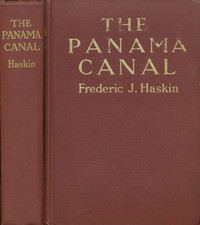
For The Panama Canal — Reading Companion, the stored edition analysis reports 101,027 words, 7 hr 20 min estimated reading time, and 14 detected text sections.
The text analysis averages about 25.1 words per sentence, while the detected sections provide another way to judge how the source is divided.
Project Gutenberg metadata also associates the work with “Panama Canal (Panama),” connecting these edition facts with the source record’s subject description.
Explore this collection
These alternatives are selected using recorded categories and estimated reading time.
About 454 minutes
Civil Engineering
104,227 recorded words. 14 minutes difference from this book's estimate.
View Gutenberg source #62609About 299 minutes
Civil Engineering
68,579 recorded words. 141 minutes difference from this book's estimate.
View Gutenberg source #38782About 253 minutes
Civil Engineering
57,990 recorded words. 187 minutes difference from this book's estimate.
View Gutenberg source #64174Search stored excerpts and compare books → Choose by your preferences →
Choices use stored catalog measurements. Estimates vary with reading speed. A shared category is a catalog label, not a claim that two books have the same argument or literary quality.
Search reads excerpt text stored with this catalog and links to its associated Gutenberg record. The connection is stored in the site database; this tool does not recheck that every excerpt is word-for-word identical to that external record. Excerpt search does not cover every chapter and does not verify historical publication dates.
Catalog snapshot checked: 2026-09-26. Coverage: 91 public books, 91 available source excerpts.
Calculated from edition completeness, EPUB availability, text structure and catalogue metadata. Not a user rating.
Total of 100 points, scaled to a 2.5-5.0 range. Editions with an empty description or a missing EPUB file are not scored.
Public-domain source text
The source text is kept in the dedicated reader, separate from this catalogue record and its commentary.
Frederic J. Haskin's The Panama Canal (1913) opens with a striking claim of authority: five named individuals—including Colonel George W. Goethals, chief engineer, and official photographer Ernest Hallen—vetted or contributed to specific portions. The preface further reveals that Goethals asked Haskin to drop a chapter titled "The Man at the Helm," a detail that hints at tensions between the author's desire for a complete story and the engineer's preference for a narrower focus. Haskin states his aim is to tell "the layman the story" in the simplest manner possible, resisting romantic history and confining himself to "the story of the canal itself."
The book's front matter lists five "Points of Authority," each tied to a specific person: Goethals corrected construction chapters, Hallen supplied photographs, the National Geographic Society provided a bird's-eye view, G. Thomas Ritchie prepared the index, and Howard E. Sherman revised proofs to government typographical style. This explicit scaffolding suggests Haskin sought credibility by associating his work with official or expert figures. More telling is the preface's revelation that Goethals requested the omission of a chapter about himself. Haskin writes that acceding "would be to fail to tell the whole story," yet he complied. The reader is left to wonder what that chapter might have contained—and how the book's narrative was shaped by this act of deference.
Haskin devotes considerable space to the rival Nicaraguan canal route, which the United States nearly chose in 1902. He details surveys by Col. Orville Childs for President Fillmore in 1852, a French concession in 1858 that the U.S. blocked, and the 1876 commission's unanimous preference for Nicaragua. The Maritime Canal Company of 1889 built only three-quarters of a mile before failing, leaving "wrecked hopes" visible to visitors. Haskin's description of the 1899 Isthmian Canal Commission's work is precise: 20 working parties, 159 engineers, 455 laborers, and a proposed canal 184 miles long with 14 locks, costing $189 million. This thorough treatment of the also-ran route underscores the contingent nature of the Panama decision.
Haskin's preface explicitly targets the non-specialist, promising to avoid technical jargon while covering a "technical character" subject. The excerpts show he delivers on this by mixing narrative history with concrete details: the Vanderbilt Company's navigation rights on Lake Nicaragua, the 13-mile stagecoach stretch to San Juan del Sur, and the depth (35 feet) and width (150 feet) of the proposed Nicaraguan canal. He also notes the abandoned French Panama Canal Company's work, which "fell by the wayside" when the U.S. undertook its project. The book's structure—14 text sections, an extensive index by a Library of Congress staffer—reinforces its role as a reference for curious readers rather than engineers.
Haskin's book is best read as a contemporary document of how the canal's story was packaged for the American public at the moment of its completion. The careful attribution of authority, the suppressed chapter, and the lingering shadow of Nicaragua all reveal choices about what to emphasize and what to omit. Readers interested in the politics of knowledge—who gets to shape a monumental narrative—will find as much to examine in the front matter as in the engineering details.
I keep thinking about Haskin’s quiet awe at the canal’s scale, how a human plan could reshape the world’s map. It reminded me of another old favorite, The Modern Railroad — Reading Companion, which feels the same—just a steady, wondering voice watching steel and sweat turn distance into nearness. Both left me oddly gentle toward progress.
Use these questions to collect your thoughts before moving on.